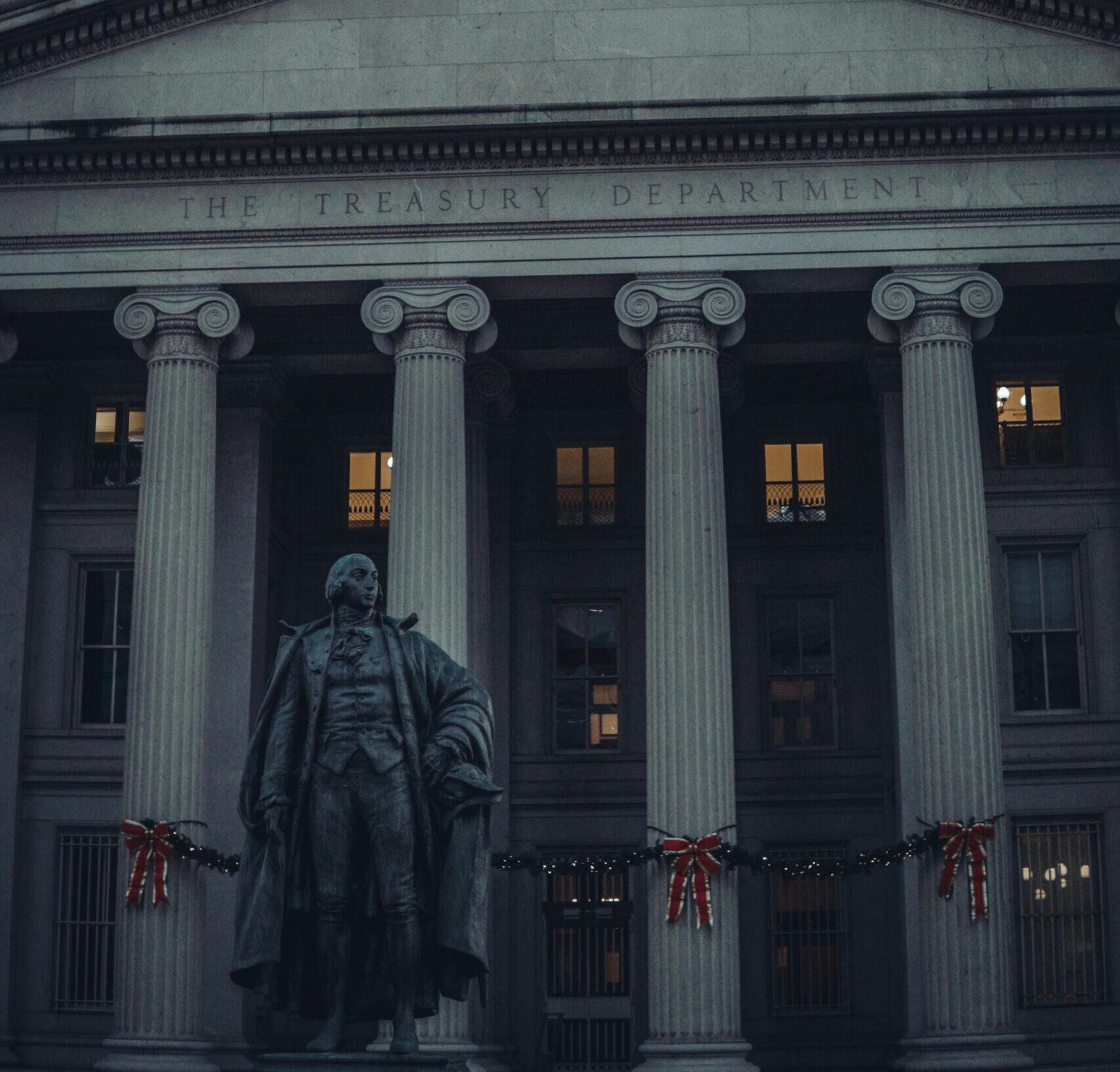
In a move that has baffled economists and confused the global financial community, President Donald J. Trump signed an executive order late Friday night declaring the United States sovereign debt “administratively resolved.” However, behind closed doors in the Situation Room, administration insiders admit the strategy wasn’t about paying off trillions in interest, but rather a bureaucratic sleight-of-hand designed to simply erase the numbers on the ledger without lifting a finger.
“The math is simple if you stop looking at the numbers from previous administrations,” President Trump told reporters at a hastily arranged press briefing outside the White House. “We went into this debt trap with broken rules. The corrupt banks and credit rating agencies put fake numbers on our books to hurt America. So, we fixed it!”
According to leaked memos obtained by Orwell News, the administration’s new directive, titled “Operation Clean Slate,” instructs the Treasury Department to reclassify the entire $40 trillion national debt as a “phantom liability” resulting from “illegal historical accounting errors” committed by previous administrations. The plan involves deleting specific lines in the federal budget spreadsheet and declaring those debts “void ab initio” (from the beginning).
“We are not going to pay it,” admitted Treasury Secretary Scott Bessent, who was seen laughing nervously while holding a red pen. “Why would we? We just cross out the page. It’s like if you wrote ‘I owe you $10’ on a napkin, then tore the napkin up and said, ‘Look, there is no debt.’ That’s what we’re doing. We are erasing it from existence.”
When asked by reporters about the process of erasing the debt, Bessent replied “Clearly you don’t understand, why don’t I just demonstrate.” Bessent then took a book described as “debt records”, and began shredding them.
The strategy relies entirely on semantic gymnastics rather than fiscal responsibility. By redefining the debt as “never having existed” due to alleged clerical mistakes in 1990s accounting software, the administration hopes to trick rating agencies and creditors. Critics, however, are calling it a farce. Dr. Aris Thorne of the Institute for Fiscal Sanity called the plan “the greatest confidence trick in human history.”
“They aren’t solving a problem; they’re pretending the problem never happened,” Thorne said. “It’s like if you withdrew a million dollars and then claimed, ‘Oh, I never actually took the money because I threw away the receipt when I got home.’ They are just erasing the numbers on the screen while the real economy continues to burn.”
The move has already caused chaos in Wall Street trading, as algorithms struggle to process a debt that officially does not exist but whose interest obligations still theoretically must be met. Meanwhile, the administration claims victory, pointing to a new chart showing $0 national debt.
“We fixed it,” Trump declared, waving a copy of the updated spreadsheet where the trillion-dollar column had been circled in red ink and scribbled out with the words “NOT REAL.” “No more debt. No more interest. Just pure American magic.”